

Confidentiality is built into an acquisition’s structure, not left to informal discretion. UHNWI property acquisition privacy in Abu Dhabi depends on careful choices about ownership structures, jurisdictions and counterparties, as well as control over how information moves through the transaction. The aim is to limit unnecessary exposure, not to imply anonymity or bypass formal property processes.
For high-value buyers, discretion matters at every stage, from initial discussions and buyer qualification to negotiations and the handling of ownership information. A carefully arranged structure can support confidentiality, but it must also account for control rights, governance and practical transaction requirements.
This guide explains how designated ownership areas, cross-border structuring and jurisdiction choices shape a private acquisition in Abu Dhabi. It also outlines where trusted advisory support can help manage introductions and deal flow with greater control, so you can assess the right next steps without confusing privacy with secrecy.
Key Takeaways
- Map ownership, control rights and information flows before choosing a cross-border structure; each affects who can access transaction details.
- Assess the property’s location and ownership arrangement together so the acquisition structure fits the intended purchase.
- Compare jurisdictions by governance and enforceability, not confidentiality alone; a structure must also support clear decision-making.
- Use qualified introductions, careful buyer screening and structured negotiations to reduce unnecessary exposure during deal discussions.
Property acquisition and cross-border structuring
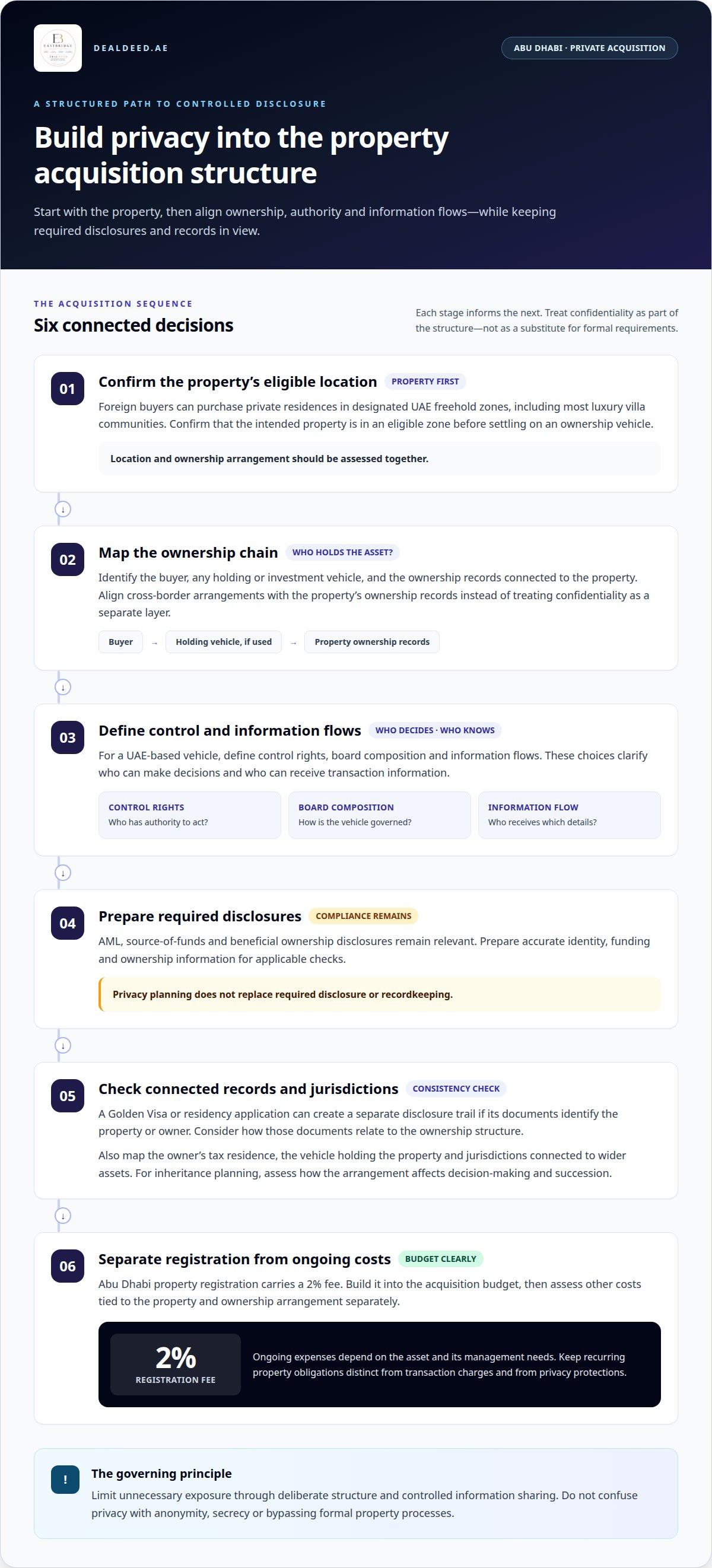
Privacy planning starts with the property’s location and the buyer’s ownership structure. In Abu Dhabi, both shape how an acquisition is recorded and how information flows.
Foreign buyers can purchase private residences in designated UAE freehold zones, including most luxury villa communities. Confirm that the intended property is in an eligible zone before settling on an ownership vehicle. This step links the property to the buyer’s legal and financial arrangements.
For a UAE-based holding or investment vehicle, define control rights, board composition and information flows as part of the structure. These choices clarify who can make decisions and receive transaction information. Cross-border arrangements should align the entity’s governance with the property’s ownership records, rather than treating confidentiality as a separate layer.
AML, source-of-funds and beneficial ownership disclosures remain relevant to a private acquisition. Prepare accurate identity, funding and ownership information for applicable compliance checks. Privacy planning does not replace required disclosure or recordkeeping.
A Golden Visa or residency application can create a separate disclosure trail if its documents identify the property or its owner. Consider how those documents relate to the ownership structure, so residency and property records do not create avoidable inconsistencies.
Tax and Inheritance Considerations
Discreet ownership does not remove tax or succession considerations. Map the owner’s tax residence, the vehicle holding the property and the jurisdictions connected to the buyer’s wider assets. For inheritance planning, assess how the ownership arrangement affects decision-making and succession. Address these matters alongside the acquisition structure, not as a later adjustment after registration.
Acquisition and Ongoing Costs
Abu Dhabi property registration carries a 2% fee. Build that charge into the acquisition budget, then identify other costs tied to the chosen property and ownership arrangement. Ongoing expenses depend on the asset and its management needs, so assess them separately from registration. A clear cost schedule helps distinguish transaction charges from recurring property obligations without confusing either with privacy protections.
Discretion and trust in private-client relationships
In Abu Dhabi, discretion depends on how buyer information moves between advisers, agents and sellers. Set clear boundaries from the outset: identify who receives the brief, which details they need and how enquiries are relayed to the buyer. For example, share lifestyle requirements without circulating personal history or unrelated wealth details.
Demand makes controlled communication more important. Abu Dhabi recorded د.إ142 billion in property transactions in 2025 and د.إ66 billion in Q1 2026. These figures describe market activity, not a reason to broadcast a buyer’s intentions. A measured process keeps property criteria, identity and negotiation authority distinct until each recipient needs them.
Before an introduction, define the brief and its sharing limits. A useful brief can specify:
- Property type, preferred area and essential lifestyle requirements.
- Whether the buyer is ready to proceed and who can discuss terms.
- Which identity or funding details are appropriate for the current stage.
For high-value assets, trust also depends on verification. Confirm each intermediary’s role and keep transaction communications within the agreed channel. A buyer seeking a villa on Saadiyat Island, for example, can have location and property criteria considered before wider personal details enter the discussion. Confidentiality means controlled disclosure, not withholding information required for a transaction.
Private Buyer Brief Matching can give serious property demand a more focused route to relevant opportunities. It is most useful when an individual wants to communicate precise criteria without creating public market noise. A concise, controlled brief supports direct introductions and gives each party a defined role. For a discreet starting point, explore private buyer brief matching.
Jurisdiction selection and enforceability
Choose a jurisdiction with the property, ownership vehicle and intended decision-making in mind. For high-net-worth individuals, a strategic structure must support capital control and clear authority, not simply reduce visibility. Map where each entity is formed, which counterparties receive information and how decisions are documented. This gives advisers a practical basis for assessing confidentiality and enforceability together.
Assess Abu Dhabi and Dubai by the specific property and transaction, rather than treating them as interchangeable. Dubai’s legal framework provides clear guidelines and dispute-resolution mechanisms for property investors. For other UAE emirates, compare the relevant property records, ownership arrangements and counterparties directly. A structure used for one asset does not automatically fit another.
Start with the intended ownership chain. Identify the buyer, any holding entity, the people authorised to act and the records each party must maintain. Then trace information flows from acquisition discussions through registration and future governance. If a UAE-based vehicle holds an Abu Dhabi residence, its board composition and control rights should reflect the buyer’s actual decision-making process.
Enforceability depends on more than choosing a jurisdiction with a strategic reputation. Agreements need to identify decision-making authority, responsibilities and how disputes will be resolved. For example, if two directors must approve a sale, the governing documents should make that process clear. Ambiguous authority can undermine both control and confidentiality when counterparties need to establish who may act.
For global wealth planning, test the arrangement against future events, not only the purchase. Consider a change in decision-makers, a transfer of interests or an inheritance event. These scenarios matter when protecting a legacy across several assets. A focused review can reveal mismatches between the property’s ownership record, the entity’s governance and the family’s intended control. Keep the structure coherent, documented and suited to the Abu Dhabi asset.
Privacy and discretion in UHNWI advisory
For UHNWI property acquisition privacy in Abu Dhabi, advisory work should control information without obstructing a valid transaction. Buyer identity and ownership information are recorded for official property registration; that does not mean every detail is publicly searchable. Treat registration as a formal disclosure and manage access to information shared beyond it.
Exposure can arise at several points. An agent may circulate a buyer profile too widely, or a developer may receive more personal context than needed. Banks require information for their processes, while property managers need practical details to manage an estate. Court records may create another disclosure channel if a dispute becomes formal. Each channel has a distinct purpose and audience.
A disciplined advisory process sets boundaries before introductions. It separates property criteria from personal details, limits circulation to relevant counterparties and records who may negotiate. For example, an initial brief can state the preferred location, property type and decision authority without including unrelated lifestyle or family information. Necessary identity and funding details enter the appropriate process when required.
Review each handoff. Confirm the recipient’s role, share only information relevant to that stage and keep a clear record of instructions. This protects the buyer’s position while allowing agents, banks and property teams to do their work. Confidentiality is controlled disclosure, not a promise that no party will ever know who owns an asset.
Advisory support is most useful when a buyer needs a quiet introduction or a seller wants a discreet route to qualified interest. Structured discussions can limit unnecessary circulation of an offering while keeping negotiations purposeful. The right process aligns the buyer’s privacy preferences with transaction needs, rather than relying on informal assurances.
For a discreet property introduction, request a private deal introduction through a controlled, qualified process.
DealDeed
DealDeed keeps property discussions focused through private matching and agent-to-agent coordination. Private Buyer Brief Matching connects a buyer’s defined brief with relevant buyer-side interest through a vetted RERA-licensed agent. For sellers, Quiet Disposal Mandates provide a discreet route to qualified buyers without public listings or marketing. The Agent-to-Agent Deal Desk supports confidential deal flow between RERA-licensed agents.
Turn to DealDeed when you want to explore opportunities or discuss a property without unnecessary public exposure. Submit your property criteria or mandate for private matching between RERA-licensed agents, with relevant details shared confidentially when a match is proposed.
For a discreet conversation about your property requirements, contact DealDeed.
Set Your Next Acquisition in Motion
A considered approach to UHNWI property acquisition privacy in Abu Dhabi starts by translating personal priorities into clear instructions. Decide what information can be shared at each stage, who may speak on your behalf and what would make an introduction relevant. These choices give advisers a practical framework before discussions begin.
Keep the next step focused. A concise brief can define your target property, preferred communication channel and decision process without adding details that are not needed yet. As the acquisition progresses, update those instructions when the counterparties or transaction stage changes. Clear boundaries help keep the process deliberate.
For discreet support with property introductions and deal flow, start a private advisory conversation with DealDeed. A clear brief is a strong place to begin.
Frequently Asked Questions
How do you address confidentiality and discretion for UHNWI clients?
Confidentiality starts with defining what can be shared at each stage. Separate property criteria, identity details and information needed for formal checks. For example, an initial discussion can focus on location and property type before personal details are shared with relevant transaction parties. Keep a clear record of authorised spokespeople and recipients. Discretion should limit unnecessary exposure, not obstruct required compliance disclosures.
Can UHNWI foreigners buy property in Abu Dhabi, and where are designated investment zones?
Yes. Foreign buyers can purchase private residences in designated UAE freehold zones, including most luxury villa communities. In Abu Dhabi, assess the intended property’s location and ownership route before proceeding. Saadiyat Island is known for limited, highly coveted private estates, but the specific property’s designated-zone status matters more than its address alone. Confirm that the proposed purchase fits the relevant ownership framework.
What ownership structures can protect privacy when acquiring Abu Dhabi property?
A buyer can assess direct ownership alongside a UAE-based holding or investment vehicle. Compare how each option handles control, decision-making and information flows, then consider how it connects to the property’s title. A company structure may separate the asset from an individual’s other holdings, but it does not remove disclosure obligations. The right structure supports lawful control and accurate ownership records, rather than promising anonymity.
What are the Abu Dhabi rules for trusts, foundations, SPVs, and nominee ownership of property?
These structures are not interchangeable, and their suitability depends on the proposed ownership and registration arrangement. Assess the governing documents, who exercises control, how the property title will be held and what disclosures apply. A trust, foundation or special purpose vehicle should not be chosen on its label alone. Nominee arrangements also require careful analysis of the underlying ownership and authority they represent.
What are the legal steps and documents for buying Abu Dhabi property through a company or representative?
Begin by establishing the company’s authority to acquire the property and the representative’s authority to act. Then align the transaction file with the buyer’s identity, ownership structure and applicable funding checks. Relevant documents should reflect those roles and approvals, alongside the property transaction and registration requirements. Keep signing authority consistent across company records, purchase documents and registration to avoid conflicting instructions.


