

A wider audience is not always a better buyer pool. A vetted international buyer network for Abu Dhabi real estate connects sellers with serious regional and overseas prospects through a selective process. International buyers can purchase property in designated investment zones.
That distinction matters whether you’re considering a purchase or preparing a property for sale. Buyers need clarity on location, ownership and transaction terms. Sellers need relevant introductions without unnecessary public exposure.
This guide explains how private buyer matching can connect Abu Dhabi property sellers with regional and international buyers, what vetting and matching involve, and what buyers and expats should consider. It also covers practical transaction steps, including property eligibility, due diligence and the role of a discreet introduction.
Key Takeaways
- Match a property brief to regional and overseas buyers whose requirements align with its location and ownership structure.
- Understand how identity, purchase intent and evidence of funds help distinguish serious prospects from unqualified enquiries.
- Protect a sale by managing confidentiality, transaction terms and the risks of relying on incomplete buyer information.
- Compare private matching, public portals and broker-led approaches by weighing reach, exposure and the type of buyer access each provides.
Access to regional and international buyers
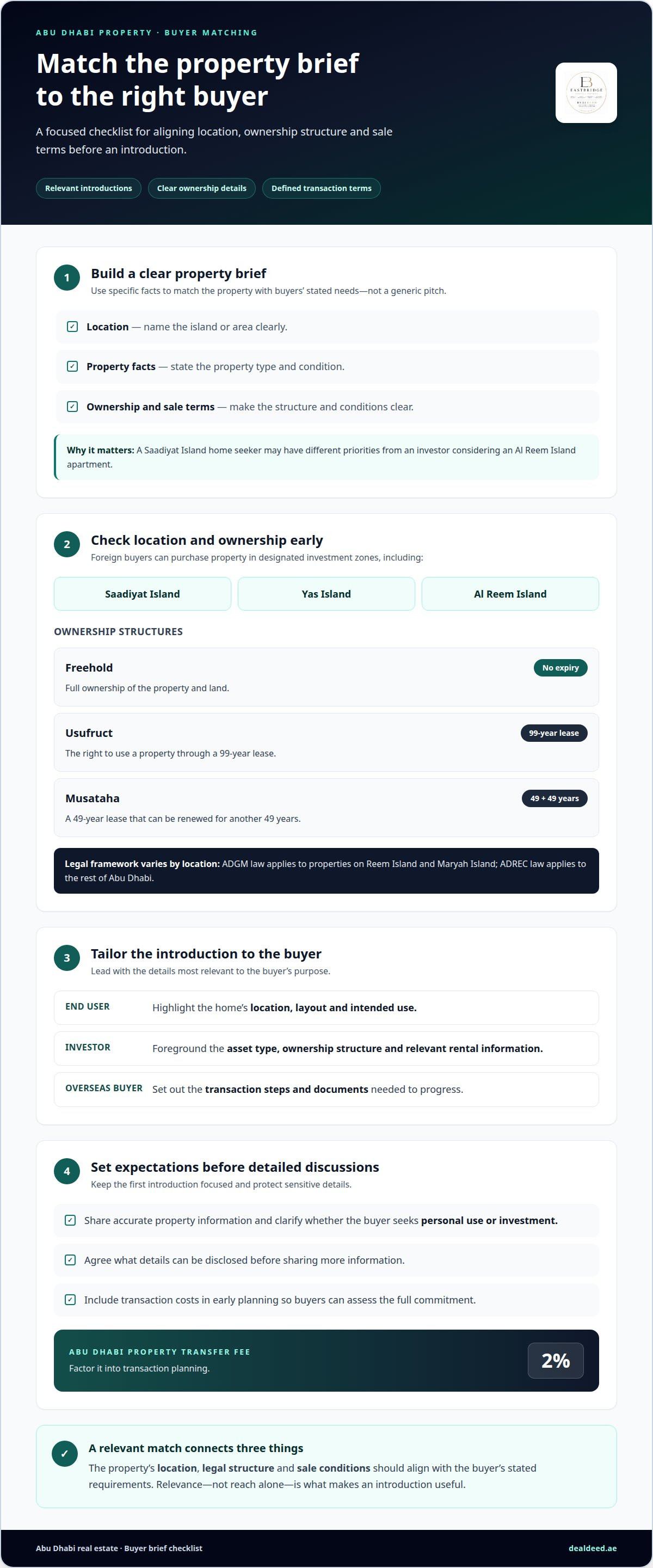
A vetted international buyer network for Abu Dhabi real estate starts with a clear property brief. Specify the location, property type, ownership structure, condition and sale terms. Then match those details to buyers’ stated needs rather than circulating a generic pitch. A buyer seeking a home on Saadiyat Island may have different priorities from an investor considering an apartment on Al Reem Island.
Location shapes who can buy and which ownership rules apply. Foreign buyers can purchase in designated investment zones, including Saadiyat Island, Yas Island and Al Reem Island. Abu Dhabi freehold ownership provides full ownership of the property and land with no expiry. Other arrangements differ: usufruct grants the right to use a property through a 99-year lease, while musataha is a 49-year lease that can be renewed for another 49 years.
The applicable legal framework also varies by location. ADGM law applies to properties on Reem Island and Maryah Island; ADREC law applies to the rest of Abu Dhabi. Identify the property’s location and ownership type early so regional and overseas prospects can assess whether it fits before detailed discussions.
- For an end user: highlight the home’s location, layout and intended use.
- For an investor: foreground the asset type, ownership structure and relevant rental information.
- For an overseas buyer: set out the transaction steps and the documents needed to progress.
Keep the first introduction focused. Share accurate property information, clarify whether the buyer seeks personal use or investment, and agree what details can be disclosed. Abu Dhabi’s property transfer fee is 2%. Including transaction costs in early planning helps buyers assess the full commitment, without confusing interest with readiness to proceed.
A network adds value through relevance, not reach alone. A suitable match connects a property’s location, legal structure and sale conditions with a buyer’s stated requirements. For sellers, this can mean fewer mismatched introductions and a clearer path from initial interest to a considered offer.
How do Abu Dhabi buyer networks verify international buyers and proof of funds?
Verification should establish who the buyer is, what they intend to purchase and whether their funding route is credible. Begin by confirming identity and authority. If a representative is involved, identify both the buyer and representative, clarify who can make decisions, and match names across documents before sharing sensitive property details.
Proof of funds helps distinguish active purchasing capacity from general interest. Evidence should relate to the buyer and proposed purchase. Depending on the funding route, examples may include a bank letter, account statement, financing indication or evidence of proceeds from another sale. These are practical examples, not a universal document list.
- Identity: compare the buyer’s stated name with their identification and correspondence.
- Authority: establish whether the person communicating can make or approve an offer.
- Funding route: clarify whether funds are available, financed, or expected from a sale.
- Consistency: compare the stated budget and purchase timing with the evidence provided.
Assess evidence for relevance, not appearance alone. A statement should identify the account holder and issuing institution. A financing indication should relate to the intended purchase. If the buyer expects proceeds from another sale, clarify how far that sale has progressed. This helps assess readiness without mistaking interest for proof of funds.
Restrict personal and financial records to people involved in the transaction. Share only what is needed for the next decision, and store documents through controlled channels. Keep a concise review record noting what was received, what it supports and what still needs clarification before an offer progresses.
For example, an overseas buyer may have clear identity documents but rely on a property sale abroad. Record that funding route and its status separately from available cash. A structured buyer brief process can keep property requirements and buyer readiness aligned during introductions.
What risks should Abu Dhabi sellers consider when working with international buyer networks?
International reach can bring qualified enquiries, but information can also be exposed if it circulates too widely. Set a disclosure sequence before sharing property records. Begin with a concise brief, then release sensitive documents only when they’re relevant to a defined transaction step. Keep ownership records and personal contact details out of introductory material.
Buyer readiness can change after an introduction. Record the buyer’s stated funding route, decision-making authority and intended timing. If the buyer depends on proceeds from another sale, distinguish that from funds already accessible. Revisit these points when an offer is submitted or the buyer requests a material change.
- Unclear authority: identify who can negotiate and approve terms, especially when a representative speaks for an overseas buyer.
- Incomplete property details: keep the brief, supporting records and later statements consistent to reduce disputes over what was represented.
- Cross-border payment planning: state the offer currency, AED settlement expectations, payment sequence and responsible parties in writing.
- Uncontrolled circulation: agree who may receive property details and whether onward sharing needs seller approval.
Pay close attention to contract terms. Abu Dhabi buyers should read the MOU carefully: it governs the transaction between buyer and seller and binds the parties if a dispute arises later. Sellers should ensure the written terms reflect the agreed price, conditions, deadlines and responsibilities. Informal message threads can leave key points scattered across conversations.
Keep a clear record of each stage. Save the approved property brief, buyer’s offer, revisions and written approvals in one transaction file. If the buyer requests a change to the completion date or payment sequence, document it before proceeding. This gives the seller, buyer and agents a shared reference.
Control the introduction itself, too. Confirm the buyer’s identity and the representative’s role before arranging access or circulating further documents. A careful process cannot remove every transaction risk, but it gives the seller a clearer basis for deciding what to disclose, which terms need attention and when an introduction is ready to advance.
How can sellers compare vetted buyer networks, property portals, and traditional brokers in Abu Dhabi?
Compare each route by reach, privacy, qualification and transaction support. A vetted international buyer network for Abu Dhabi real estate is built around selected introductions, not public visibility. Ask how buyer requirements are matched, what information is shared initially and how an introduction progresses. A public property portal presents listings to a broad audience, while a broker typically manages direct buyer discussions.
Each channel serves a different seller objective. A portal makes property details publicly accessible and can attract enquiries from people with varied levels of readiness. Private matching suits sellers who prioritise controlled circulation and relevant introductions. A traditional broker provides direct transaction coordination. In Abu Dhabi, real estate brokers commonly coordinate the property transfer, while lawyers are rarely involved.
- Buyer network: assess how briefs are matched, how buyer identity and readiness are reviewed, and how disclosure is controlled.
- Property portal: consider public exposure, enquiry handling, and the work required to separate serious interest from general browsing.
- Traditional broker: clarify the agent’s role in negotiations, document coordination and the transfer process.
Compare the actual workflow, not just the channel’s label. A seller arranging a discreet disposal may value limited circulation. One seeking broad visibility may prefer a public listing. A seller who needs hands-on coordination may prioritise a broker’s role in negotiations and transfer.
Before choosing a route, define the outcome you need and ask for its process in writing. Look for clear rules on access to property information, buyer introductions, offer communication and transaction handover. These details matter in Abu Dhabi because the MOU governs the buyer-seller transaction and binds the parties if a dispute arises later.
If controlled introductions fit your sale, submit a property brief to start a focused matching conversation.
DealDeed: Private Buyer Brief Matching
DealDeed’s Private Buyer Brief Matching connects property briefs with serious, vetted buyers through private introductions rather than public exposure. Sellers can also use Quiet Disposal Mandates when discretion is central, or the Agent-to-Agent Deal Desk when coordination between agents is the priority. All matches are conducted between RERA-licensed agents.
Prepare a concise brief with the property’s location, ownership details, condition and sale terms. This gives potential matches a clear basis for assessing fit before discussions advance. DealDeed’s matching desk is a natural next step when you’re ready to share a property with a selected buyer audience instead of relying on broad visibility.
Contact DealDeed to discuss a suitable next step.
Set a clear direction for your next move
The key decision isn’t whether to reach the largest audience. It’s how much exposure you want, what buyer readiness matters and who should manage each introduction. Define those priorities before circulating a property brief. This gives each conversation a clear purpose and aligns your sale strategy with your preferred level of privacy.
The right vetted international buyer network for Abu Dhabi real estate should fit your strategy, not dictate it. Consider what information you’re prepared to share, which buyer profile suits the property and when an introduction should move into formal negotiation. A deliberate brief turns an open-ended search for buyers into a controlled next step.
Take time to settle your priorities before opening discussions. If a private, targeted approach fits your plans, contact DealDeed about buyer access. Bring the property’s key details and your preferred approach to the conversation. You can move forward with a clear process and discretion at its centre.
Frequently Asked Questions
Buying in Abu Dhabi?
International buyers can purchase property in Abu Dhabi’s designated investment zones. Identify the area and ownership arrangement that suit your intended use. For example, a buyer considering Maryah Island should account for the applicable legal jurisdiction during due diligence. Then compare the seller’s terms with your financing plan and intended timing before making an offer.
What is a vetted international buyer network for Abu Dhabi real estate?
Private buyer matching connects Abu Dhabi sellers with regional and overseas buyers whose stated requirements fit a property. A useful brief captures the desired area, property type, intended use, purchase timing and decision-making authority. This gives an introduction context and keeps early discussions focused on the specific property rather than broad, unqualified interest.
Which Abu Dhabi property brokers offer vetted international buyer networks?
DealDeed provides private buyer matching as an introducer, not a property broker. Each match requires an agent on both sides, and participating agents must hold valid RERA Office Registration Numbers (ORN) and Broker Registration Numbers (BRN). For sellers seeking international buyer access, this agent-to-agent structure connects a property brief with relevant buyer representation while DealDeed remains outside direct representation.


