

Can you sell a Dubai property discreetly without unsettling the tenant? You can limit public exposure by exploring a private sale, but no approach can guarantee the tenant won’t become aware. If you’re researching how to sell property in Dubai without alerting tenants, the distinction matters: a quieter sale is possible, but bypassing tenancy obligations isn’t.
It’s reasonable to worry that public advertising could invite unwanted attention or make a tenant anxious. A sale doesn’t automatically end an existing tenancy, and the buyer generally takes ownership subject to the lease. If you need the tenant to vacate because you intend to sell, Dubai law requires 12 months’ written notice served through a notary public or registered mail.
This guide explains what a private sale can keep discreet, where confidentiality has limits, and how selling with the tenancy in place compares with seeking vacant possession. You’ll also learn how to prepare a concise, verified property brief for controlled introductions to serious buyers through RERA-licensed agents, without a public listing. The aim is a quieter process that respects tenant privacy and the rules that still apply.
Key Takeaways
- Learn how to sell property in Dubai without alerting tenants by limiting public exposure, not by assuming a sale can remain entirely unknown.
- Compare private buyer matching, public marketing and a sale planned around vacant possession to identify the route that fits your priorities.
- Review the lease, access arrangements and any notice or vacant-possession terms before coordinating buyer interest.
- A concise property brief can support controlled introductions while keeping shared information relevant to the transaction.
- DealDeed matches sellers with serious buyers through RERA-licensed agents and verifies property details against Dubai Land Department data. This does not replace legal due diligence.
Can You Sell a Tenanted Property in Dubai Without Alerting the Tenant?
A discreet sale is possible in the sense that you can limit public exposure and introduce the property to selected buyers through a controlled process. It isn’t a promise that the tenant will remain unaware. A buyer needs relevant details to assess the property, and later steps, such as arranging access, may bring the sale to the tenant’s attention.
Keep two issues separate: how you find a buyer and what you owe under the tenancy arrangement. A private sale can avoid a public listing, but it doesn’t cancel contract terms, access requirements or applicable Dubai rules. For anyone asking how to sell property in Dubai without alerting tenants, the realistic objective is controlled disclosure, not secrecy at any cost.
What does selling privately actually keep out of public view?
Without a public listing, the property isn’t advertised openly on portals or through broad public marketing. That doesn’t mean there is no buyer disclosure. A serious buyer needs enough accurate information to judge the opportunity, such as the property’s location, relevant features and tenancy status.
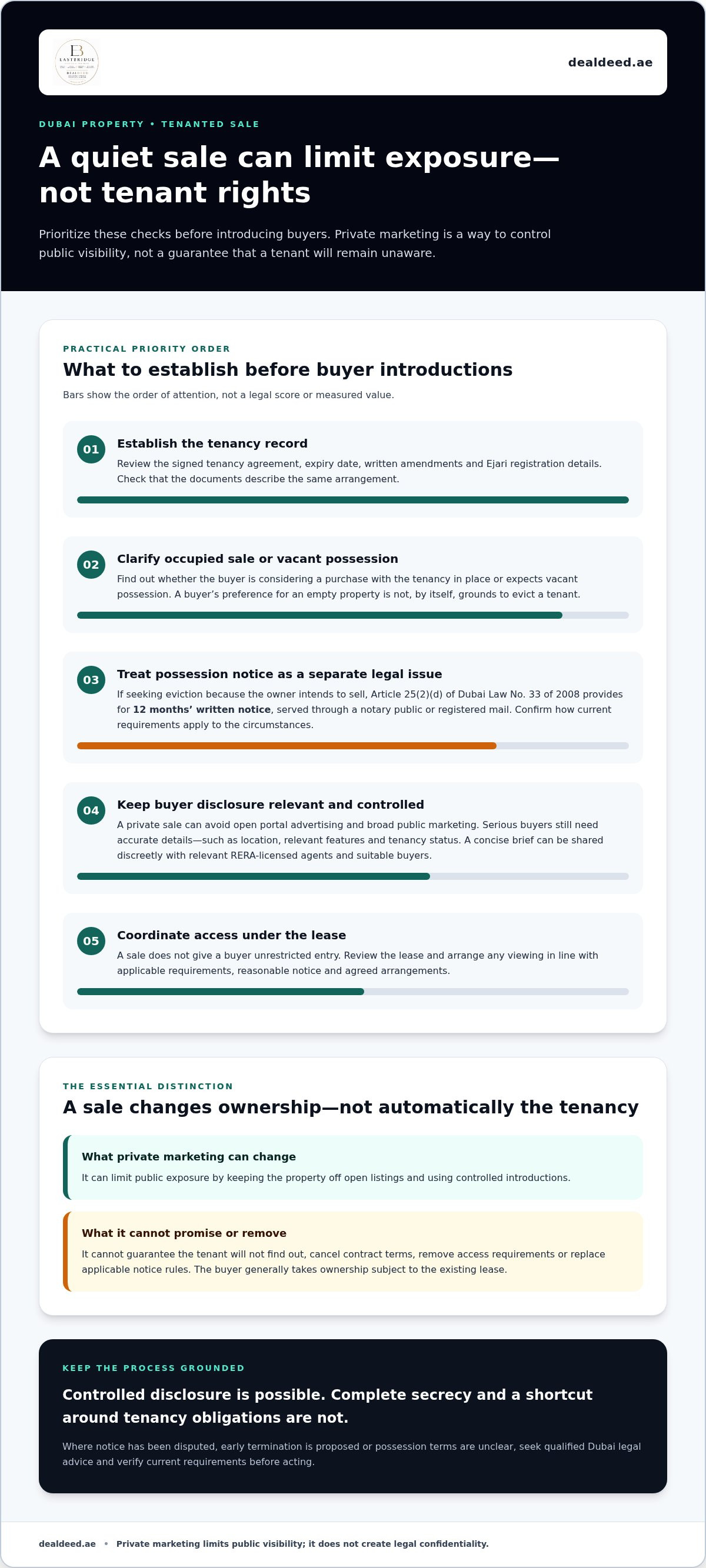
In a confidential agent-to-agent introduction, a concise brief can be shared with relevant RERA-licensed agents and suitable buyers. Include only the details needed to assess the opportunity and handle them discreetly. This can reduce unnecessary exposure, but it can’t guarantee anonymity, prevent the tenant from finding out or remove the need to coordinate any viewing properly.
Private marketing limits public visibility. It does not create legal confidentiality or remove obligations to the tenant.
Does a tenant's lease automatically end when the property is sold?
No. Under the Dubai rule described in Article 25(2)(d) of Dubai Law No. 33 of 2008, a landlord seeking to evict a tenant to sell must give 12 months’ written notice, served through a notary public or registered mail. The sale itself doesn’t automatically terminate the tenancy; the buyer generally takes ownership subject to the existing lease.
That distinction matters. A seller doesn’t have to treat a tenanted sale as a vacant-possession sale, and shouldn’t assume a tenant can be removed simply to make the transaction easier. Contract terms and the circumstances of the sale can affect the next steps, so verify the current requirements before relying on a particular notice or timeline.
For a sale with the tenancy in place, focus on different practical questions: What does the lease say? What information will buyers need? How can necessary access be coordinated in line with the agreement and applicable rules? A private introduction changes the route to a buyer, not the tenant’s rights. If vacant possession is required, treat notice and timing as a separate legal issue rather than an informal condition of sale.
Privacy is a process choice, not a legal shortcut. Keep disclosures measured, avoid public exposure if it isn’t needed, and make tenancy arrangements part of the transaction from the outset.
How Dubai Tenancy Rules Shape a Quiet Property Sale
A discreet sale can control how a property reaches buyers. It cannot change the tenancy contract or create a right to vacant possession. Before sharing a brief or agreeing on a sale structure, establish the lease position and what the buyer expects. A buyer’s preference for an empty property is not, by itself, grounds to evict a tenant.
Whether a tenant-related notice question arises depends on the lease, the seller’s reason for seeking possession, the proposed timing, and the access or vacant-possession terms being negotiated.
Which tenancy and transfer details should the seller establish?
Start with the signed tenancy agreement, its expiry date, any written amendments and the tenancy’s Ejari registration details. Check that the documents describe the same arrangement. Then clarify whether the buyer is considering an occupied-property purchase or requires vacant possession. Identify any agreed conditions that depend on the tenant leaving.
These checks help distinguish a transfer subject to an existing tenancy from a plan to seek possession. Dubai’s Rental Disputes Center (RDC) handles rental disputes; the Dubai Land Department (DLD) is relevant to property and ownership records. Their roles are distinct. Confirm current procedures and terminology before relying on a particular step.
When should a seller seek Dubai-specific legal guidance?
Get qualified Dubai legal advice if a notice has been disputed, early termination is proposed or the contract’s possession terms are unclear. For an eviction sought because the owner intends to sell, Article 25(2)(d) of Dubai Law No. 33 of 2008 provides for 12 months’ written notice through a notary public or registered mail. Confirm how the current requirements apply to the specific circumstances before acting.
Access needs separate attention. A sale doesn’t give a buyer unrestricted entry. Review the lease and coordinate any viewing in accordance with applicable requirements, using reasonable notice and agreed arrangements. Don’t promise a buyer vacant possession on a date that depends on a notice process or tenant agreement that hasn’t been established.
Check legal conclusions against authoritative Dubai sources, including applicable legislation and relevant DLD or RDC guidance. Ejari records are useful for establishing registered tenancy details, but they don’t replace review of the signed contract and later written amendments. The precise obligations can depend on those documents and the facts.
Once the occupancy position is clear, state it accurately in a private buyer brief. DealDeed’s private buyer matching connects sellers with serious buyers through RERA-licensed agents. The service facilitates introductions, not legal advice or a substitute for checking tenancy obligations.
Private Sale, Public Listing, or Vacant Possession: Compare Dubai Sale Routes
There isn’t one route for every tenanted property. The right fit depends on how much public exposure you’ll accept, whether a buyer can assess the property with the tenant in place, and what the lease and applicable rules allow. If your priority is learning how to sell property in Dubai without alerting tenants, private matching may reduce public visibility, but it can’t guarantee the tenant won’t find out or that a sale will complete.
| Sale route | Exposure and buyer reach | Tenant disruption and access | Legal and contractual considerations |
|---|---|---|---|
| Private buyer matching | Property details are shared selectively with relevant transaction participants. Reach is targeted, not public. | May limit unnecessary attention, but buyers still need relevant information. Any viewing must be coordinated appropriately. | The existing lease and applicable notice, access and disclosure requirements still matter. |
| Public marketing | Public advertising increases visibility and may expose the property to a broader pool of potential buyers. | Enquiries and viewing requests may require more coordination with the tenant. | Public exposure doesn’t change tenancy obligations or establish a right to vacant possession. |
| Sale planned around vacant possession | Marketing can be private or public, depending on the seller’s approach and buyer requirements. | The tenant’s continued occupancy and any proposed move-out arrangements are central to planning. | Possession depends on the contract, applicable legal requirements and the specific circumstances. It isn’t a shortcut to ending a tenancy. |
When might a private sale with the tenant in place suit the seller?
This route may suit an owner who values limited public exposure and is open to buyers assessing an occupied property. An investor may consider the existing tenancy relevant to their plans, subject to reviewing the lease, rent details and transfer arrangements. The buyer still needs enough accurate information to assess the asset, and interest or completion is never guaranteed.
When might public exposure or vacant-possession planning be considered?
Public marketing may suit a seller who prioritises broader visibility and accepts that more people could see the listing. Vacant-possession planning may matter if a buyer requires an empty property, but that preference alone doesn’t create an eviction right. Treat it as a separate legal and contractual question, not an assumed condition of every sale.
Use the comparison as a decision framework, not a promise of reach or speed. First clarify whether the buyer can purchase with the tenancy continuing. Then weigh privacy, access needs and the seller’s intended possession terms against the lease and verified Dubai requirements. A public listing and a private introduction are different marketing routes; neither replaces careful transaction planning.
How to Prepare a Discreet Sale Without Disrupting Dubai Tenants
A controlled process keeps information moving only where it’s needed. It doesn’t hide material facts or suspend tenancy obligations. If you’re working out how to sell property in Dubai without alerting tenants, prepare the transaction in stages and keep a clear record of what is shared, with whom and why.
- Review the documents. Gather the title and property records, tenancy agreement, Ejari details, expiry date and any written amendments. Note unresolved issues that could affect occupancy, access or the proposed sale.
- Set privacy boundaries. Decide which details can be used for initial matching and which should wait until a relevant buyer is identified. Keep tenant names, contact details and personal circumstances out of the initial brief unless disclosure is necessary and appropriate.
- Prepare a verified brief. State the property identifiers, occupancy status, material tenancy facts and your objectives accurately. DealDeed verifies property details against Dubai Land Department data, but this doesn’t replace legal or contractual review.
- Match relevant buyers. Share the brief only with relevant, vetted transaction participants. A private introduction is targeted, not anonymous; a prospective buyer still needs enough information to assess the opportunity.
- Coordinate next steps. Route enquiries through the participating agents, record what has been shared, and agree how further information or a viewing will be handled. Check the lease and applicable requirements before arranging access.
What should go into a confidential property brief?
Use verified identifiers and a clear description of the property’s occupancy and tenancy position, including relevant dates and terms. State whether you’re considering a sale with the tenant in place or have another possession objective. Remove unnecessary personal information from early-stage materials, but don’t omit facts that could materially affect a prospective transaction. A brief should be concise, not misleading.
How can buyer enquiries and property access be handled carefully?
Keep buyer communication on a defined channel through participating agents rather than public comments or open advertising. Before an inspection, review the agreement and applicable rules, then coordinate respectfully with the tenant. Don’t imply that ownership or a buyer’s interest grants unrestricted entry. Log enquiries, information shared, access discussions and agreed next steps so the process remains controlled.
Seller-controlled privacy measures:
- Choose whether to avoid public listing and restrict initial circulation.
- Limit early-stage materials to relevant property information.
- Keep a record of disclosures and buyer enquiries.
Matters requiring agreement or legal review:
- Viewing arrangements, access rights and any tenant communication required under the contract or applicable rules.
- Notice, early termination or vacant-possession terms, if relevant to the transaction.
- Any disputed or unclear tenancy obligation.
For a controlled introduction, prepare a property brief for private buyer matching through DealDeed’s process with RERA-licensed agents. The service facilitates introductions, while tenancy decisions and legal obligations remain separate matters.
Use DealDeed's Private Matching Desk for a Dubai Property Sale
A discreet sale needs a defined route from seller intent to buyer introduction. DealDeed’s Private Matching Desk connects motivated property sellers in Dubai and Abu Dhabi with serious, vetted buyers through RERA-licensed agents. It avoids public listings and marketing, offering an alternative when limiting public exposure matters. It doesn’t guarantee a sale, anonymity or that a tenant won’t become aware.
DealDeed facilitates introductions. It isn’t a direct brokerage service or a public property portal, and it doesn’t replace legal, tenancy or transaction advice. Property details are verified against Dubai Land Department data. That helps establish key property information, but it isn’t a complete legal due-diligence review and doesn’t resolve lease, access or vacant-possession questions.
How private buyer matching works
The process begins with a seller brief or mandate that sets out the property, occupancy status and sale objectives. A concise, accurate brief helps agents assess which buyers may be relevant. DealDeed matches the opportunity with serious, vetted buyers through RERA-licensed agents, with transaction discussions handled confidentially between agents.
That controlled circulation can reduce public exposure, not guarantee that a tenant won’t find out. Include the material facts a prospective buyer needs, while avoiding unnecessary tenant details at the initial stage. Any further disclosure, inspection or access should reflect the seller’s privacy preferences alongside the tenancy agreement and applicable requirements.
What happens after a suitable introduction?
After an introduction, participating agents continue transaction discussions and handle relevant disclosures with the parties. The seller and buyer still need to address the lease, access arrangements and any agreed possession terms. DealDeed’s role is to facilitate the introduction, not to determine legal rights or confirm that tenancy obligations have been satisfied.
DealDeed charges participating agents a fixed introduction fee only if a matched deal completes. The fee is not charged to the seller. There’s no promise that a suitable match will proceed or that discussions will result in a completed transaction.
If you’re considering how to sell property in Dubai without alerting tenants, a clear brief gives a private matching process a more controlled starting point. Set out the verified property details, occupancy facts and your objectives, including whether you’re open to a sale with the tenancy continuing. Keep legal questions and tenant access arrangements separate, and address them through the appropriate channels before moving forward.
To explore a private introduction, submit a confidential property brief to DealDeed. Share relevant information accurately, with the understanding that private matching limits public exposure but cannot guarantee confidentiality from every transaction participant or from the tenant.
Set Your Privacy Boundaries Before Moving Forward
Define your decision points before buyer conversations begin. Decide what information you’re comfortable sharing at the initial stage, what occupancy arrangement you could accept, and which questions need legal review. Clear boundaries help keep discussions focused and reduce avoidable uncertainty later.
If your priority is how to sell property in Dubai without alerting tenants, treat discretion as a way to limit unnecessary exposure, not a promise of silence. A sale can be explored privately while tenancy-related decisions remain documented and compliant. Keeping those aims distinct helps preserve control without treating the tenant’s rights as an obstacle.
A short seller brief can turn those priorities into a clear starting point. State your objectives, the property’s occupancy position and any limits on disclosure or access. Then consider whether a private buyer introduction fits your plans. Submit a confidential property brief to DealDeed to begin the process, with your priorities clearly set from the outset.
Frequently Asked Questions
Can I sell my Dubai property without telling my tenant?
You may be able to explore a sale without announcing it publicly, but don’t assume you can keep the transaction from the tenant or withhold information required by your contract or applicable rules. If you’re considering how to sell property in Dubai without alerting tenants, first identify what the lease says about communication, access and occupancy. Have a qualified Dubai property lawyer review any uncertain notice or disclosure issue before taking action.
Does selling a tenanted property in Dubai end the lease?
No. Don’t assume the sale ends the lease or gives the buyer vacant possession. The buyer’s offer and sale documents should accurately reflect whether the property is occupied and what tenancy arrangements are in place. If the buyer expects the tenancy to continue, clarify that before terms are finalised. Review the agreement and circumstances with a qualified Dubai property lawyer before relying on a particular outcome.
Do I need to give my tenant notice before selling in Dubai?
Not necessarily. A sale and a notice seeking possession are different steps, and selling alone shouldn’t be treated as an automatic requirement to evict. Whether notice is relevant depends on the reason, contract, timing and current Dubai requirements. Before sending a message or formal notice, establish what outcome you’re seeking and get advice on the required form and service method. Don’t rely on informal communication instead of verifying the rules.
Can a landlord show a Dubai property to buyers while it is rented?
Arrange access only in line with the tenancy agreement and applicable requirements; a planned sale doesn’t grant unrestricted entry. Before proposing a visit, clarify its purpose, who would attend and possible timing, then follow the process required by the lease and current rules. If the agreement is unclear or the tenant objects, pause and seek qualified local legal guidance rather than treating buyer interest as permission to enter.
Can I sell my Dubai property privately without listing it online?
Yes, you can explore a private matching route that avoids public listings. DealDeed facilitates introductions between sellers and serious, vetted buyers through RERA-licensed agents. A private process still involves sharing accurate, relevant details with transaction participants as discussions advance. It can limit broad public exposure, but it can’t guarantee anonymity, prevent the tenant from learning of the sale or ensure a transaction will complete.
What if my tenant finds out that I am selling the property?
Respond calmly and accurately. Don’t promise that the tenant’s occupancy will change, or that it won’t, unless that position has been properly established. Keep a record of what you communicate and refer questions about notice, access or lease terms to qualified Dubai legal advice if the answer is uncertain. A tenant learning of a sale doesn’t by itself settle what happens next; the contract and applicable requirements still guide the process.


