

What protects your commission if a buyer or seller continues directly after you make the introduction? Knowing how to ensure agent commission protection in Dubai 2026 starts with a clear record, not an assumption that everyone remembers who connected the parties. When roles and fee expectations are unclear, scattered messages can make the introduction difficult to establish.
It’s reasonable to want your contribution recognised before sharing sensitive details. The practical answer is to document who introduced whom, confirm each agent’s role, and record commission expectations in the appropriate written agreements before the transaction progresses. This guide explains how to build a reliable introduction trail, what to clarify between parties, and when Dubai-specific legal or regulatory advice may be needed. It also distinguishes an agent’s brokerage commission from DealDeed’s separate agent-to-agent introduction fee, which applies to participating agents only when a matched deal completes. Neither replaces brokerage agreements or guarantees commission entitlement. The aim is a quieter, more controlled process: clear consent, defined roles, and evidence kept together.
Key Takeaways
- Learn how to ensure agent commission protection in Dubai 2026 by recording the introduction, responsibilities, and fee expectations before sharing sensitive details.
- Use a dated, secure introduction trail so relevant confirmations and deal records are easier to retrieve if accounts differ later.
- Compare written agreements, email confirmations, controlled introductions, and private matching workflows rather than relying on a single safeguard.
- Check identities and authority, confirm consent and roles, and document fee terms before sharing a buyer, seller, or property brief.
- Understand how DealDeed’s Agent-to-Agent Deal Desk supports confidential matching, and how its separate fixed introduction fee differs from brokerage commission.
Why commission protection in Dubai starts before the property introduction
Commission protection begins before a buyer receives a seller’s details or a property brief reaches another agent. It means having timely, written evidence of who made the introduction, what each participant agreed to do, and how a fee is expected to arise. That record can help prevent conflicting accounts later. It doesn’t, by itself, guarantee payment or establish that an arrangement is legally enforceable.
Verbal expectations are easy to remember differently. One agent may believe they introduced the buyer; another may see their work as the decisive connection. If the parties haven’t documented their roles and fee terms, the dispute can become a matter of competing recollections rather than a clear record.
What should an agent clarify before sharing a buyer or mandate?
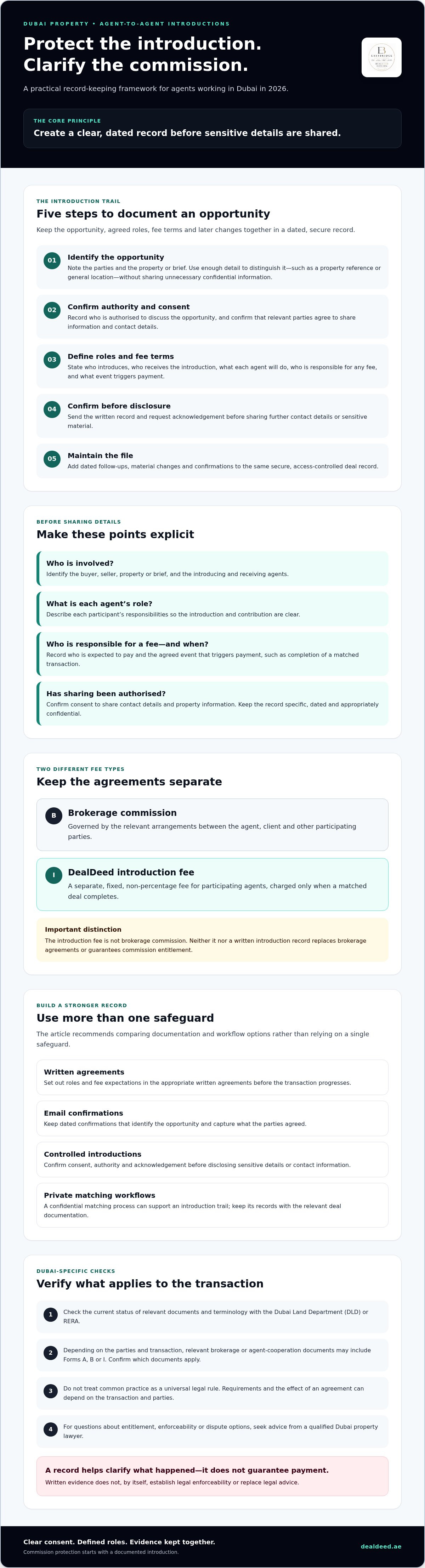
Before making an introduction, identify the buyer, seller, property or brief, introducing agents, and each party’s role. Then record who is expected to pay a fee and what event triggers it, such as completion of a matched transaction. Confirm that the relevant parties consent to sharing contact details and property information. Keep the confirmation dated and specific enough to identify the opportunity without circulating more sensitive information than necessary.
Separate the fee types. A brokerage commission is governed by the relevant arrangements between the agent, client, and other participating parties. A platform’s introduction fee is a distinct charge under its own terms. For example, DealDeed’s fixed, non-percentage introduction fee is charged to participating agents only when a matched deal completes. It isn’t the agent’s brokerage commission, and it doesn’t replace brokerage agreements or regulatory requirements.
Why Dubai-specific agreements and terminology matter
Use the documents and terminology that apply to the transaction, and verify their current status with the Dubai Land Department (DLD) or RERA. The Dubai Real Estate Regulatory Agency (RERA) overview offers general context, not a substitute for current official guidance. Depending on the parties and transaction, agents may need to consider relevant brokerage or agent-cooperation documents, including Forms A, B, or I. Confirm which documents apply before relying on them.
Don’t treat a common practice as a universal legal rule. Requirements and the effect of an agreement can depend on the transaction and the parties involved. Have a qualified Dubai property lawyer review legal questions about commission entitlement, enforceability, and dispute options.
For agents asking how to ensure agent commission protection in Dubai 2026, the first move is controlled and practical: clarify consent, roles, payment responsibility, and the fee trigger before the introduction. Documentation creates a clearer trail. It doesn’t replace legal advice or promise a particular outcome.
Build a defensible commission record with a clear introduction trail
A useful record is created before the sensitive details move. Keep the introduction, agreed roles, fee terms, and later changes together, with dates and clear references to the opportunity. An introduction trail is dated proof of consent, roles, and who referred the opportunity to whom.
Use this sequence before sharing a buyer, seller, or property brief:
- Identify the opportunity. Note the parties and the property or brief. Include enough identifying detail to distinguish it, such as a property reference or general location, while avoiding unnecessary confidential information.
- Confirm authority and consent. Record who is authorised to discuss the opportunity and that the relevant parties agree to share the information and contact details.
- Define roles and terms. State which agent is introducing, which agent is receiving the introduction, what each will do, who is responsible for any fee, and what event triggers payment.
- Confirm before disclosure. Send the written record and ask recipients to acknowledge it before sharing further contact details or sensitive material.
- Maintain the file. Add dated follow-ups, material changes, and confirmations to the same secure, access-controlled deal record.
Which documents and messages should agents retain?
Keep the relevant mandate or agency agreement, written fee terms, approvals, and messages that show who introduced whom and for which opportunity. Preserve material follow-up discussions and any changes to roles or terms. A single, organised deal file is easier to review than a trail split across personal chats, email threads, and separate devices. Limit access to people who need the information.
How should agents confirm an introduction in writing?
Keep the confirmation brief and specific: name the parties, identify the opportunity, state the agreed roles and fee trigger, and set out the next step. Ask each recipient to acknowledge the details or correct them before further disclosure. Use approved secure channels, retain the dated response, and follow applicable privacy and data-handling requirements.
For current transaction terminology and official guidance, consult the Dubai Land Department (DLD). Check that the property reference and any agreement details are accurate, but don’t circulate more personal or property information than the introduction requires. A record supports clarity; it doesn’t guarantee payment or determine legal enforceability.
Agents using a private matching workflow can also review the Agent-to-Agent Deal Desk as one way to structure a defined introduction. It doesn’t replace brokerage agreements or legal advice. For how to ensure agent commission protection in Dubai 2026, keep the evidence together, confirm consent, and document changes as they happen.
Compare commission-protection methods without relying on a single safeguard
No single channel does every job. A written agreement can set out responsibilities; a dated email can confirm a specific introduction; a controlled handover can limit unnecessary disclosure; and a private matching workflow can keep the opportunity and participating agents connected in a more structured process. Compare each method against four questions: Is it clear? Can it be traced later? Does it limit exposure? Is it practical to maintain?
- Written agreements: Strongest for recording agreed scope and fee terms when properly completed and aligned with the transaction. They require careful review and version control.
- Email confirmations: Useful for creating a dated record of a particular introduction. They’re quick to search, but may leave responsibilities or fee triggers ambiguous.
- Controlled introductions: Sharing details only with the intended recipient can support confidentiality. It still needs written confirmation of consent, roles, and the opportunity.
- Private matching workflows: Can help keep an introduction defined and reduce broad circulation of buyer or property details. Agents still need to confirm their own brokerage arrangements and retain relevant records.
Written agreements versus informal messages
A signed agreement can clarify the parties, scope, responsibilities, and fee trigger in one place. Messages can supplement it by confirming what happened and when, but shouldn’t be treated as a cure for unclear or conflicting terms. Keep the governing agreement and each dated version together. Check that follow-up emails match the agreed terms, and resolve inconsistencies in writing rather than relying on an informal exchange to change the arrangement.
Exclusivity and non-circumvention wording can have significant consequences. Don’t assume a clause will protect a particular commission simply because it appears in a message or template. The UAE Ministry of Justice lists legislation, including the UAE Civil Transactions Law; how laws apply to an agreement depends on the facts and wording. Ask a qualified Dubai property lawyer to review such clauses. No workflow overrides signed agreements or applicable Dubai rules.
Private matching versus public lead sourcing
Broadly circulating a buyer brief or property details may create more exposure and make it harder to track who received the original opportunity. A controlled agent-to-agent introduction can keep the recipient list narrower, but only if consent and roles are recorded and information is handled appropriately. For a closer look at this approach, see the Dubai real estate deal desk guide and the Dubai Land Department verified deals guide.
For agents assessing how to ensure agent commission protection in Dubai 2026, the practical choice is not one safeguard over all others. Match the method to the opportunity, keep written terms consistent, restrict access to sensitive details, and seek legal review where wording or entitlement is uncertain.
Use checklists to reduce Dubai commission disputes
A short pre-introduction check can expose gaps before they become a disagreement. Use it each time you share a buyer, seller, or property brief, even when the parties know one another. A familiar contact isn’t a substitute for verified authority, clear consent, and written terms.
The pre-introduction checks agents can complete
- Verify identity and authority. Confirm who you’re dealing with and whether they’re authorised to discuss the buyer, seller, or property. Use appropriate verification procedures and check relevant agency details.
- Confirm consent. Make sure the relevant parties agree to share contact, buyer, seller, and property information. Establish what can be disclosed, to whom, and for what purpose.
- Align roles and fee terms. Check that the relevant agency arrangements and written fee terms identify each agent’s role, who is responsible for payment, and what event triggers a fee. Resolve inconsistencies before sharing further details.
- Control the information. Share only what the recipient needs for the next step. Use approved, secure channels and follow applicable privacy and data-handling requirements.
- Create a dated record. Save the confirmation and relevant documents in the deal file. Make sure the record identifies the opportunity and the parties without including unnecessary sensitive information.
If a check is incomplete, pause. For example, if an agent’s authority is unclear or the fee terms differ between an agreement and an email, don’t proceed as if the issue is settled. Ask the relevant parties to confirm the correct position in writing, then update the record before disclosing more.
What to do when a deal changes or a dispute emerges
Transactions can shift. A different buyer may enter, the property details may change, or another agent may take on a role. Record the change with its date and obtain relevant written confirmation. Don’t overwrite the original introduction record; preserve the original communications and add a clear chronology of what changed and when.
If a dispute starts, keep the discussion factual. Notify the relevant parties through appropriate written channels, retain replies, and seek professional advice before making claims about entitlement. A qualified UAE property lawyer can assess contractual questions against the documents and circumstances. Don’t threaten action or promise a legal outcome on incomplete information.
A checklist helps agents apply the same disciplined process from introduction through changes in the deal. To explore a private, agent-to-agent route for structured introductions, review the Agent-to-Agent Deal Desk. It supports confidential matching through RERA-licensed agents, but it doesn’t replace brokerage agreements or legal advice, and it doesn’t guarantee an agent’s commission. That distinction matters when considering how to ensure agent commission protection in Dubai 2026.
Where DealDeed fits in a documented Dubai agent-to-agent introduction
DealDeed’s Agent-to-Agent Deal Desk supports confidential matching between motivated Dubai property sellers and serious, vetted buyers through RERA-licensed agents. It provides a private route for a defined introduction, rather than broad circulation of a buyer brief or property opportunity. Property details are checked against Dubai Land Department data, helping agents work from verified information while keeping the transaction between participating agents.
The fee structure is separate from brokerage commission. DealDeed charges participating agents a fixed, non-percentage introduction fee only when a matched deal completes. That fee is not an agent’s commission from a client or another broker. Agents must agree their own roles, brokerage commission terms, and applicable arrangements independently. DealDeed doesn’t guarantee an agent’s commission or determine whether a separate agreement is enforceable.
What DealDeed can support, and what it does not replace
Agents can submit buyer briefs or seller mandates for confidential matching. DealDeed is not a direct brokerage, public property portal, or legal adviser. Its matching process doesn’t replace brokerage agreements, regulatory requirements, or legal advice. Before sharing an opportunity, participating agents should still confirm consent, define responsibilities, and document any commission terms between themselves and relevant parties.
For agents considering how to ensure agent commission protection in Dubai 2026, the distinction is essential: a private introduction workflow can support a clearer record of how an opportunity was matched, but it is not a substitute for the agreements that govern an agent’s brokerage commission.
How to prepare a brief for a clearer introduction
Start with accurate buyer criteria or property details, and identify the authorised agent submitting the brief. State what information may be disclosed and to whom. Confirm consent before sharing sensitive contact or property information, and keep a dated record of the submitted brief and agreed next step. A focused brief gives agents enough information to assess a potential match without exposing unnecessary details. For more on the approach, read the private real estate matching guide.
If a confidential, agent-to-agent introduction is relevant to your work, discuss a private agent-to-agent introduction. Keep your brokerage terms documented separately and seek qualified legal advice if commission entitlement or enforceability is uncertain.
Make every introduction clear from the start
Commission protection is built before a deal advances. Record who introduced the opportunity, confirm consent and responsibilities, and keep fee terms and dated communications together. When the parties, roles, or terms change, update the record rather than relying on memory. For questions of entitlement or enforceability, seek advice from a qualified Dubai property lawyer.
For agents considering how to ensure agent commission protection in Dubai 2026, the core principle is straightforward: a private matching process can support a defined introduction, but it doesn’t replace brokerage agreements or guarantee commission. DealDeed matches buyers and sellers through RERA-licensed agents, checks property details against Dubai Land Department data, and charges participating agents a fixed introduction fee only when a matched deal completes. That fee is separate from brokerage commission.
If a confidential agent-to-agent introduction suits your requirements, discuss a private agent-to-agent introduction. With clear roles, careful records, and the right advice, you can approach each opportunity with greater confidence and control.
Frequently Asked Questions
How can a real estate agent protect their commission in Dubai?
Confirm roles, fee terms, and the introduction in writing before sharing sensitive deal details. Keep dated agreements, consent records, and follow-up communications together in a secure deal file. Check that documents fit the transaction and reflect current Dubai requirements. These steps improve clarity and traceability, but they don’t guarantee payment or replace legal advice. For questions about commission entitlement or enforceability, ask a qualified UAE property lawyer to review the specific documents and circumstances.
Is a written agreement enough to guarantee an agent’s commission in Dubai?
No written agreement should be treated as an automatic guarantee of commission. Its effect depends on the wording, the parties, the circumstances, and applicable requirements. A clear agreement can record responsibilities and provide evidence of what was agreed, but ambiguity or incomplete supporting records may still lead to a dispute. Check that related messages are consistent with the agreement, retain relevant versions, and ask a qualified UAE property lawyer to review the specific terms.
Can an agent claim commission if a buyer bypasses them after an introduction?
It depends on the applicable agreement, the evidence, the transaction circumstances, and current legal requirements. An introduction alone shouldn’t be assumed to create an enforceable right to commission. Keep dated records showing consent, who introduced the buyer, your role, and the agreed fee terms. If a buyer continues directly and a dispute arises, preserve the communications and agreements, then seek advice from a qualified Dubai property lawyer before asserting an entitlement.
What should agents document before introducing a buyer to a seller in Dubai?
Record the parties and their authority, the relevant property or buyer brief, each agent’s role, consent to share information, and agreed fee arrangements. Date the confirmation and keep it accessible to the relevant participants. Limit disclosure to information needed for the introduction, and use secure channels that meet applicable data-handling requirements. Check that the record is consistent with existing agreements, then save acknowledgements and material follow-up communications in the same deal file.
Does RERA registration automatically protect an agent’s commission?
No. Don’t assume professional registration alone determines who is entitled to a fee in a particular transaction. The relevant agreements, each party’s role, the evidence, and current Dubai requirements still matter. Verify regulatory information through authoritative sources, and have a qualified UAE property lawyer assess a specific claim. Registration and documentation are distinct considerations; neither should be presented as an automatic guarantee that a commission will be paid.
What is the difference between a brokerage commission and an introduction fee?
A brokerage commission relates to an agent’s agreed brokerage role and terms. An introduction fee is a separate charge for facilitating a match or introduction, with its own responsible party, trigger, and contractual basis. DealDeed’s introduction fee is fixed and non-percentage based, charged to participating agents only when a matched deal completes. It’s separate from an agent’s brokerage commission and doesn’t replace brokerage agreements or guarantee commission entitlement.
What should I do if another party disputes my commission in Dubai?
Preserve signed documents, dated messages, introduction confirmations, and a factual timeline. Keep original records intact, and avoid making claims you can’t substantiate. Review the agreement that governs the arrangement, then consult a qualified UAE property lawyer about appropriate next steps. If you need to understand a complaint or dispute process, verify the current route through official Dubai channels rather than relying on informal guidance or assumptions about the outcome.


