

A viewing request isn’t proof that someone is ready to buy. To understand how to avoid unqualified buyers in Dubai real estate, ask whether the buyer has arranged funds or obtained mortgage pre-approval, and whether the cash is allocated to the purchase. For an off-plan property, payments should go through approved escrow channels, never to individuals.
Serious buyers may still need time to decide. Look for evidence and consistency, not confidence or urgency. A buyer who avoids basic financing questions, pushes for unusual payment arrangements or pressures you to act deserves closer scrutiny. This guide explains how to prequalify buyers before viewings, assess financing readiness and recognise pressure tactics or suspicious payment requests. It also covers what to do if a transaction feels wrong, so you can protect your time, information and funds without making a private sale public.
Key Takeaways
- Ask buyers about their intended purchase timeframe, funding arrangements and mortgage pre-approval before scheduling viewings.
- Use relevant proof of funds to assess readiness, and protect sensitive financial information during the process.
- Watch for pressure to rush or requests for unusual payment methods; pause and seek official documentation before proceeding.
- Compare a buyer’s identity and funding details for consistency before moving into formal transaction steps.
2. Recognising pressure tactics and suspicious payment requests
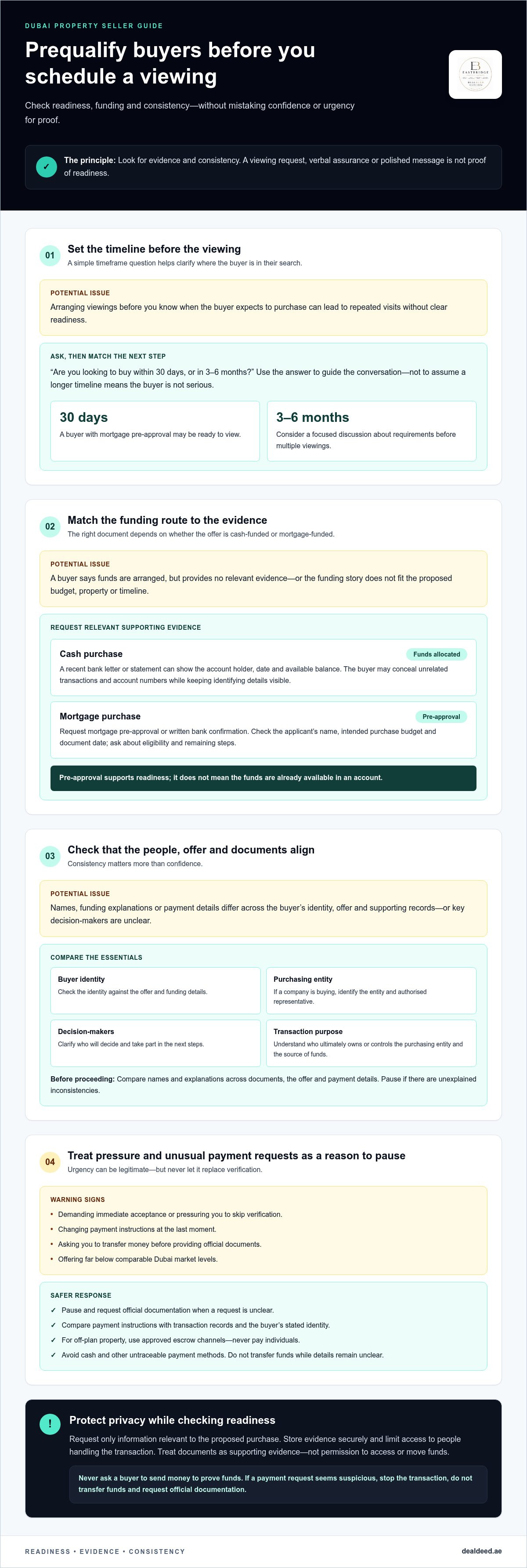
Urgency can be legitimate, but pressure to skip verification is a warning sign. Be cautious if a buyer demands immediate acceptance, changes payment instructions at the last moment or asks you to transfer money before providing official documents. For an off-plan property, payments should go only through approved escrow channels, not directly to individuals. Avoid cash and other untraceable payment methods.
Pause if the payment details don’t match the transaction or the buyer’s stated identity. Don’t transfer funds while a request is unclear. Ask for official documentation and compare the payment instructions with the transaction records. An offer far below comparable Dubai market levels also warrants extra scrutiny. A rushed decision can leave important details unchecked.
What are Dubai’s anti-money-laundering checks for real estate buyers? A disciplined review establishes the buyer’s identity, who ultimately owns or controls the purchasing entity, the purpose of the transaction and the source of funds. Check that names and explanations align across the buyer’s documents, offer and payment details. Pause if there are unexplained inconsistencies.
How can sellers avoid time-wasters and fake offers when selling property in Dubai? Ask about the buyer’s timeline and funding before arranging viewings, then request a written offer and evidence that funds are arranged or mortgage pre-approval is in place. Readiness questions belong at the start of the process.
Keep the next step controlled: don’t treat verbal assurances as proof, and don’t share sensitive documents unnecessarily. Check the buyer’s identity and funding against consistent records before proceeding. If a payment request seems suspicious, stop the transaction, don’t transfer funds and request official documentation. Clear checks protect your time and the integrity of the transaction.
3. How can Dubai property sellers prequalify buyers before arranging viewings?
Understanding how to avoid unqualified buyers in Dubai real estate starts before a viewing is scheduled. Ask when the buyer expects to purchase, how they plan to fund it, and what steps they’ve taken. For example: “Are you looking to buy within 30 days, or in 3-6 months?” These timeframes help distinguish an active search from early research without assuming a longer timeline means the buyer isn’t serious.
Next, clarify how the purchase will be funded. A mortgage buyer should say whether they have pre-approval and have checked their financing eligibility. A cash buyer should confirm that funds are allocated to the purchase. Compare these answers with the proposed budget, property requirements and timeline. Consistency matters more than confidence or a polished message.
Before arranging a viewing, confirm the essentials in writing. Record the preferred property type, purchase timeframe, funding method and key decision-makers. If another person or a company is involved, clarify who will make the decision and take part in the next steps. This can prevent repeated viewings when the buyer hasn’t aligned with others involved in the purchase.
A practical part of how to avoid unqualified buyers in Dubai real estate is matching the next step to the answers. A buyer planning to purchase within 30 days with mortgage pre-approval may be ready to view. Someone targeting 3-6 months may benefit from a focused discussion about requirements before viewing multiple properties. Use the conversation to understand readiness, not to pressure the buyer.
For a consistent approach to how to avoid unqualified buyers in Dubai real estate, share only property details that fit the buyer’s stated needs. Sellers who want introductions aligned with a property brief can use Private Buyer Brief Matching as a discreet route to buyer introductions.
For a mortgage lead, make financing eligibility part of the initial conversation. Ask whether the buyer has assessed their eligibility before arranging a viewing. If the answer is unclear, focus the discussion on the financing step and property requirements, then decide whether a viewing is appropriate. This keeps prequalification centred on readiness, not confidence.
4. What proof of funds should a Dubai real estate buyer provide?
For a cash purchase, ask for evidence that funds are available and allocated to the property. A recent bank letter or statement can show the account holder, date and available balance. The buyer can conceal unrelated transactions and account numbers while keeping identifying details visible. Treat these documents as supporting evidence, not permission to access or move funds.
For a mortgage purchase, request the buyer’s mortgage pre-approval or written confirmation from their bank. Check the applicant’s name, intended purchase budget and document date. Ask whether the buyer has checked financing eligibility and understands any remaining steps. Pre-approval helps establish readiness, but it doesn’t mean the funds are already available in an account.
Match the evidence to the offer. For a cash purchase, the documents should support the stated funding route. For a mortgage purchase, the pre-approval should relate to the buyer making the offer. If a company is buying, identify the purchasing entity and the person authorised to act for it before proceeding.
Keep the review proportionate. First request a document that shows the relevant point, such as available funds or mortgage pre-approval. Compare the name and date with the offer, and ask for clarification if they differ. Don’t rely on a cropped image that hides the account holder or makes the document difficult to assess.
Protect financial privacy while reviewing evidence. Request only information relevant to the proposed Dubai property purchase, store it securely and limit access to people handling the transaction. Never ask a buyer to send money to prove funds. The aim is to assess readiness, not to collect or control the buyer’s money.
Finally, connect funding evidence to the next step. A buyer with mortgage pre-approval may still need to complete lender procedures; a cash buyer should show that funds are allocated. Clear, consistent documents give you a practical basis for deciding whether to arrange a viewing or continue discussions.
4. How can sellers verify a buyer's identity and source of funds in Dubai?
Start by confirming who is making the offer. Compare the buyer’s identity document with the name on the offer and financing evidence. If a representative is involved, record whom they represent and request documentation of their authority. For a company purchase, identify the legal entity and the person authorised to act for it. Keep names consistent across the transaction file.
Next, trace the stated funding route. Ask whether the purchase is cash-funded or mortgage-backed, then compare the explanation with the supporting records. For a company purchase or third-party contribution, establish who controls the funds and why that party is involved. Clarify any mismatch between the buyer, purchasing entity and proposed payer before the transaction progresses.
Review documents in a controlled way. Request only records relevant to identity, authority and funding. Check that names, dates and explanations align, and note any material differences. Don’t treat a screenshot as conclusive if it hides the account holder or payment details needed for comparison. Protect copies, restrict access and don’t circulate personal financial documents beyond those handling the sale.
Verify payment instructions separately. Confirm that the receiving account matches the documented transaction route, and don’t act on last-minute changes sent through an informal message. For an off-plan purchase, payments should pass through approved escrow channels, not to individuals. If a request involves cash or another untraceable method, pause and request official documentation before transferring funds.
Dubai’s Real Estate Regulatory Agency oversees broker licensing, project registration and escrow compliance, while the Dubai Land Department regulates real estate transactions. Real estate agents operating in Dubai must hold a valid RERA broker ID. These checks establish the relevant transaction framework, but they don’t replace identity and funding consistency checks. For a discreet introduction process focused on serious buyers, arrange private buyer introductions.
Check the property details and the credentials of those involved before proceeding. Verify listings through official channels, use licensed agents and confirm ownership before paying. Before purchase, verify service charge rates with the developer and community management staff, and arrange a thorough snagging inspection to identify construction problems and unfinished obligations. If you suspect a property scam, pause the transaction, don’t transfer funds and request official documentation.
DealDeed: Private Buyer Brief Matching
DealDeed’s Private Buyer Brief Matching connects motivated sellers with serious, vetted buyers through confidential introductions between RERA-licensed agents. It can help when you want viewings to involve buyers whose requirements and readiness align with your property, without public listings or marketing.
For sellers seeking a confidential sale process, Quiet Disposal Mandates offer a discreet route to market. Agents coordinating a transaction can use the Agent-to-Agent Deal Desk. DealDeed verifies property details against Dubai Land Department data, supporting an orderly introduction while keeping the transaction private.
If a private, buyer-focused introduction suits your sale, contact DealDeed to discuss the next step.
Make buyer screening part of your sale strategy
A property sale is easier to manage when buyer qualification is built into the process, rather than improvised for each enquiry. Set a consistent standard for what you need to know before sharing sensitive details or committing time. Apply it calmly and equally. This discipline helps you stay in control instead of letting urgency dictate your next move.
Knowing how to avoid unqualified buyers in Dubai real estate comes down to making deliberate decisions at each stage. For a discreet way to match a property brief with serious buyers, DealDeed offers Private Buyer Brief Matching, Quiet Disposal Mandates and an Agent-to-Agent Deal Desk.
Contact DealDeed for buyer screening and take the next step with a clear process. Your sale can move forward with greater focus and discretion.


